At the heart of the project is a deceptively simple question: what if Australians aren’t as divided as we think?
It can certainly feel like we are. Politics plays out through outrage and argument, while declining trust in institutions and growing economic pressure can leave people feeling they have little influence over the decisions shaping their lives.
But social researcher Alex Fein from the RedBridge Group sees something different in the focus groups she runs across Australia.
When people have the time and space to talk to each other, she sees them move beyond the divisions that dominate public debate and discover how much they have in common.
“Most people agree on a set of fundamental principles, such as fairness, kindness, decency, caring for your neighbour,” Alex says. “They see those things as core to Australian values.”
It’s an idea Alex explores in her writing about the myth of polarisation: Alex describes our “in-group”: the people we see as being like us, or part of our group. She believes Australia’s in-group can be much bigger than we might think, built around the values and experiences we share rather than the things that divide us.
A healthy democracy relies on people being able to participate, exchange ideas and believe they have some influence over the decisions affecting their lives. Yet many of the people she speaks to are finding it increasingly difficult to do exactly that.
When there’s no time left to participate
Through her research, Alex has noticed that participation in politics and civil society is closely connected to something very practical: bandwidth.
People with more time and financial security have greater capacity to join organisations, attend meetings, volunteer or become involved in political and community life.
For people already stretched, participation can be much harder.
In one research project, Alex spoke with women living in outer suburban communities who wanted greater connection with their communities. Some travelled two hours to work each day. Others worked two jobs. Their neighbourhoods offered few places where people could simply meet.
“I would love to be more involved with my community, but how?” they told her. “Like, with what time? Where? How do I get there? And I’m so exhausted after my work, after my commute, that all I can do is fall back onto my bed and scroll on my phone.”
It led Alex to a different question: rather than designing ways for people to participate and expecting them to turn up, what if we started with their lives and asked what participation could look like for them?
Finding common ground
Alex has seen what can happen when people are given that opportunity.
During a 90-minute focus group, people who begin with very different views can start recognising shared experiences, listening to each other and working through why things are happening.
That requires approaching disagreement differently too.
Alex argues that rather than assuming people hold particular views because they are “bad or stupid,” we need to be curious about their circumstances and the information environments around them.
When people feel respected rather than judged or talked at, she says, they can begin looking together at the bigger forces shaping their experiences.
And sometimes the person who helps that happen is someone they already trust.
The people we listen to
Alex calls these people “moral anchors”: people within families, workplaces and communities whose opinions carry particular weight.
The idea emerged during research into attitudes towards refugees.
In one focus group, a working-class, “very blokey” man from regional Queensland heard information about the treatment of refugees that he hadn’t previously known.
“Oh, I had no idea that was going on,” he responded. “That’s disgusting. That’s terrible.”
Something shifted.
“The simplicity and logic and moral centredness of what this man was saying was so influential on everyone else that by the end of the group, everyone was saying, ‘This is unacceptable. We need to change policy.”
Alex began wondering whether trusted people like this could help well-evidenced explanations travel through communities and across the information bubbles that increasingly shape what we see and hear.
Putting the idea to the test
The project is still at an early stage. Its proposed pilot will work with people who have limited time, money or energy for civic participation, starting with their experiences and co-designing approaches that work for them.
It will combine research with organising on the ground and ask an important question: can the trust and sophisticated thinking Alex sees develop in focus groups grow into something more lasting, where people build their own capacity to understand issues, share ideas and influence the decisions affecting their communities?
Ultimately, Alex hopes the work can help shift something she hears regularly in her research: the feeling that democracy has failed and there is there is little point in participating. She hears people repeat a belief that decisions are made by a tiny group of rich people and their politician friends and that the little guy is always going to get screwed.
Instead, she wants people to see a pathway to a fairer society where people feel connected to each other, have a meaningful say in the decisions affecting them, and believe collective action can make things better.
“People keep telling me that they just want more community connection.”
“Nothing is inevitable. We’re the authors of this, so I just hope that we can all find our role in building that big in-group.”
To find out more or to support the Australian Fairness Project, please contact: tambelin@mannifera.org.au
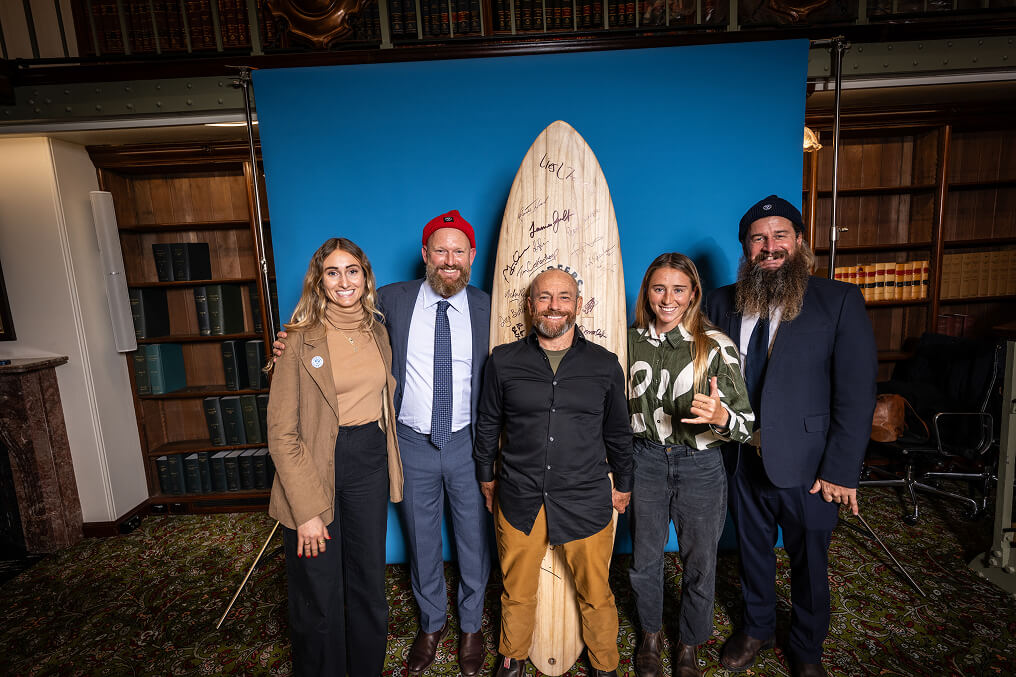
(Image: Accountable Futures Collective Defining Accountability Launch, Memorment Photography)